Unit 211, 1865 Osler St., Regina, SK, Canada S4P 1W1
Strategic Vision & Architectural Intent

Executive Summary

Eliminating the dead-weight penalty, mechanical redundancy, and operational complexity of traditional amphibious vehicles through unified design science.

The Unified Powertrain Solution

Why traditional amphibious engineering creates compromises—and how design science resolves them.

01

The Dual-Drivetrain Penalty

Conventional amphibious craft carry two entirely separate systems: heavy automotive axles and road tires combined with dedicated marine propellers or hull water-jets. This introduces excessive weight, mechanical friction, and reliability bottlenecks.

02

The Hydro-Terran Synthesis

By integrating an axial-flux or peripheral motor directly into the rim structure, the wheel assembly itself functions as a high-performance road tire on land and rotates 90 degrees to become a high-throughput axial pump-jet in water.

03

Optimized Mass Distribution

Eliminating redundant propulsion hardware drastically cuts unspring mass during road transit while providing superior steering vectoring and thrust-to-weight efficiency across marine environments.

Design Philosophy: Beyond Cinematic Redundancy

Embracing the KISS principle—proving that the best part is no part.

Architectural Philosophy

The Lotus Fallacy vs. Unified Mechanics

Pop culture gave us iconic amphibious moments like Q-Branch's modified Lotus Esprit submarine in The Spy Who Loved Me—a brilliant piece of movie magic that relied entirely on a separate, dedicated prop submarine hull tucked away behind the scenes. In the real world, trying to package an automotive drivetrain alongside an entirely independent marine propulsion setup results in unmanageable weight and mechanical bloat.

As advanced engineering principles dictate—echoing modern manufacturing philosophies—the best part is no part. By utilizing the exact same structural rim, motor, and suspension actuators to roll on land and pump water jets in the sea, lake, or river, the Hydro-Terran Drive strips away dual-system redundancy entirely.

Intellectual Property

Patent Pending

Invention Overview: The Hydro-Terran Drive establishes a comprehensive framework for individual wheel-based drive mechanisms, enabling efficient suspension, high-speed terrestrial traction, water-jet marine propulsion, and submersible navigation using substantially identical core components.

  • Scope: Tri-cylindrical oleo struts, 90° electromagnetic locking channels, rim-driven impellers, and synchronized foil rigging.
Core Structural Architecture
• Upper Cylinder (1A) with Spiral Guide Grooves
• Middle Cylinder (1B) with Anti-Rotation Splines
• Lower Cylinder (1C) & Geared Piston Head (1C2)
• Electromagnetic Solenoid Lock Pins (1D)
• Octet Truss Space-Frame Chassis (1F)

Commercial & Municipal Integration

Extending utility beyond transit into emergency response and industrial infrastructure.

Infrastructure 01

Emergency Firefighting & High-GPM Pumping

When operating on a sea, lake, or river, quick-connect Storz cam-lock adapters (10C) can be clamped directly over the deployed pump-jet nozzles.

  • High-Pressure Manifold: Directs multi-thousand GPM water streams through internal chassis plumbing (8) for municipal wildfire suppression and irrigation.
  • Stationary Anchoring: Bow winches (8C) and anchors (8D) secure the craft in high-current waterways during sustained pumping operations.
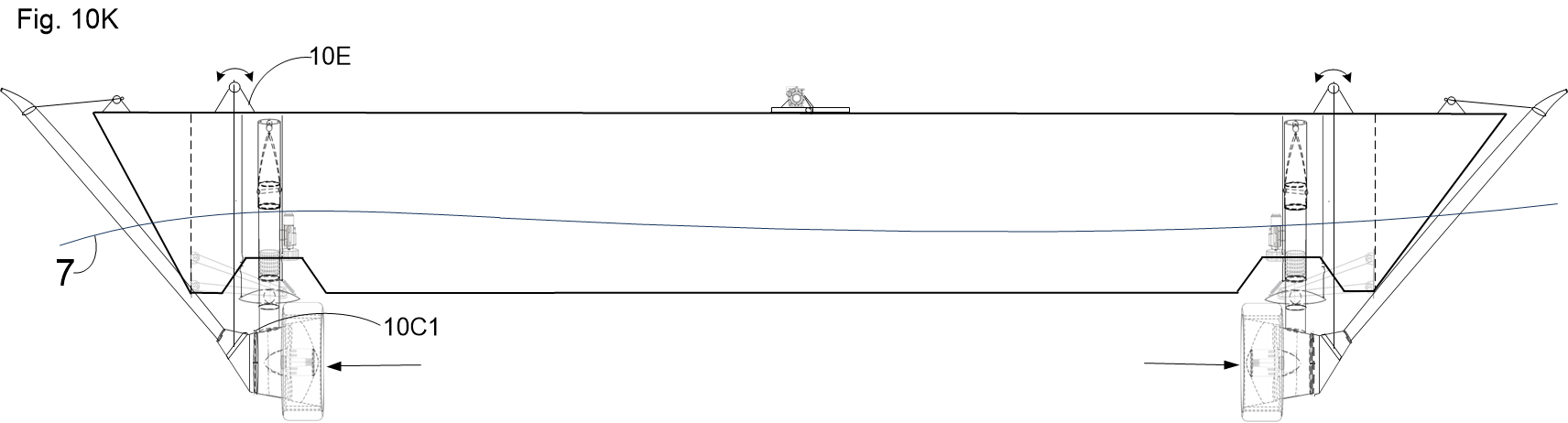
Fig 10K Water Cannons Fig. 10K — High-Powered Water Pumps in Operation
Infrastructure 02

Submersible Defense & Littoral Recon

Equipped with a sealed watertight hull and active buoyancy compensation cells, the vehicle transitions seamlessly into a fully controllable underwater submersible.

  • 360° Vectoring: Steer-by-wire servo pinions and independent hydrofoil incidence control allow zero-radius maneuvers and precise depth maintenance.
  • Silent Approach: Electric rim-drive propulsion ensures minimal acoustic signature during specialized reconnaissance and environmental research missions.
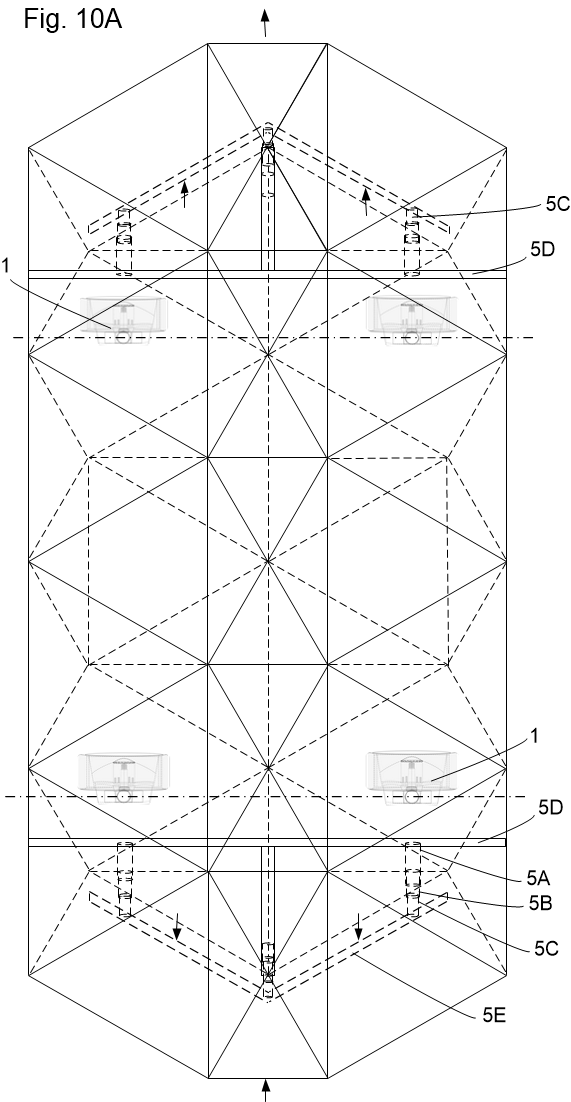
Fig 10A Chassis Water Stance Fig. 10A — Octet Chassis in Submersible / Water Stance